
By Dr. Manu Sharma, DMD, board certified orthodontist | November 2026
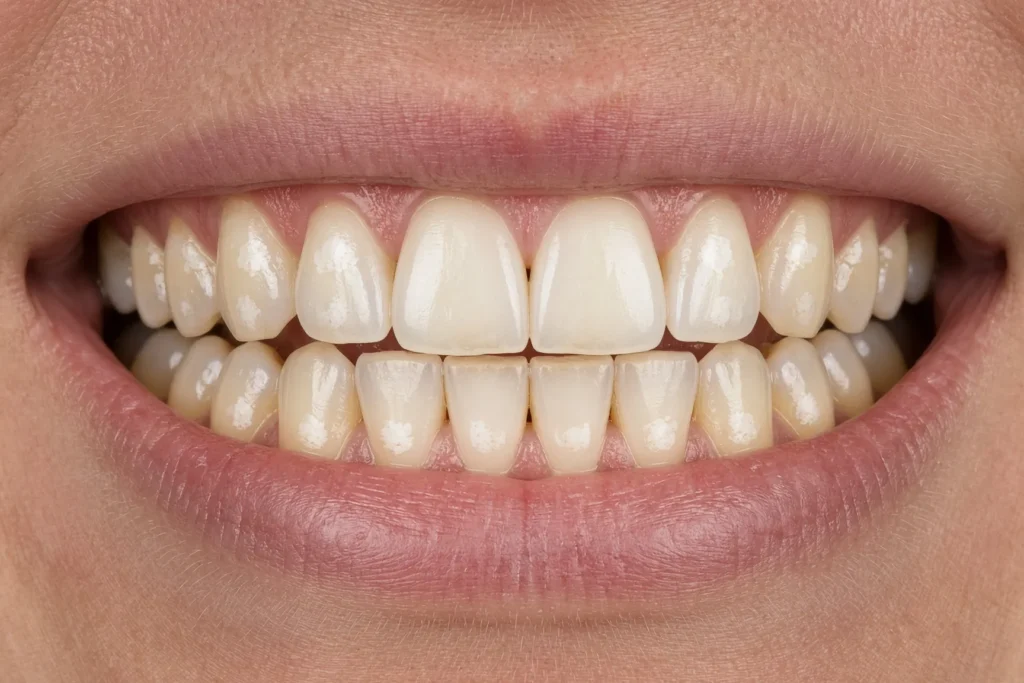
The day braces come off should reveal a straight, healthy smile. For some patients, it also reveals chalky white marks on the teeth, usually in a ring or patch where each bracket sat. These marks are called white spot lesions. They are the earliest stage of tooth decay, they are common, and in most cases they are preventable.
As an orthodontist, white spots are one of the things I most want families to understand before treatment starts, because almost all of the prevention happens at home, every day, from the first week in braces. This guide explains what white spots are, how often they occur, why braces raise the risk, what the research says about prevention, and what can be done if they appear.
Key Takeaways
- White spots are areas of early enamel demineralization, the first stage of a cavity.
- A 2015 meta analysis found about 46 percent of patients developed new white spots during fixed braces treatment.
- They form when plaque sits around brackets, especially with frequent sugary snacks and drinks.
- A 2019 Cochrane review found low certainty evidence that high fluoride toothpaste and professionally applied fluoride foam may reduce new white spots.
- Many mild spots improve after braces come off; resin infiltration is an effective option for spots that persist.
What Is a White Spot Lesion?
Tooth enamel is made of tightly packed minerals. When plaque sits on a tooth, the bacteria in it feed on sugars and produce acid. That acid dissolves minerals from just below the enamel surface. The surface stays mostly intact, but the enamel underneath becomes porous. Porous enamel reflects light differently from healthy enamel, so it looks chalky and opaque instead of glossy.
This is called demineralization, and it is the first stage of tooth decay. At this stage, the damage is still reversible in part, because saliva and fluoride can help redeposit minerals. If plaque and acid attacks continue, the lesion can deepen, the surface can break down, and a true cavity can form.
White spots should not be confused with other white marks on teeth, such as mild fluorosis or developmental enamel spots, which are present when a tooth first comes in. A dentist or orthodontist can tell these apart.
How Common Are White Spots With Braces?
White spots are one of the most common side effects of fixed orthodontic treatment. A 2015 meta analysis in the Journal of International Society of Preventive and Community Dentistry by Sundararaj and colleagues pooled data from 14 studies with more than 2,000 patients. It found that:
- 45.8 percent of patients developed new white spot lesions during treatment with fixed braces.
- 68.4 percent of patients had white spots overall when existing lesions were included.
These figures come from many different populations and study methods, so your own risk could be higher or lower. They show clearly why prevention needs attention from day one.
Why Braces Raise the Risk
Brackets, bands, and wires create many small ledges and corners where plaque collects and a toothbrush has trouble reaching. The most common place for white spots is the strip of enamel between the bracket and the gumline, where plaque is easy to miss.
Several factors make white spots more likely:
| Factor | Why it matters |
|---|---|
| Plaque left around brackets | Bacteria produce acid right against the enamel |
| Frequent sugary snacks and drinks | Each exposure starts a new acid attack |
| Sipping soda, juice, or sports drinks | Keeps teeth bathed in sugar and acid for long periods |
| Brushing that misses the gumline | The area below the bracket is the most common site |
| Longer treatment time | More time for plaque to accumulate |
| Dry mouth or mouth breathing | Less saliva to neutralize acid and repair enamel |
Aligners are not risk free either. If you eat or drink anything other than water with aligners in, or put them back without brushing, sugar and plaque are held against the teeth for hours. See how to clean aligners.
Preventing White Spots: What the Research Shows
The 2019 Cochrane review Fluorides for preventing early tooth decay during fixed brace treatment, by Benson and colleagues, analyzed randomized trials including about 1,800 participants. The main findings:
| Approach | What the review found | Certainty |
|---|---|---|
| High fluoride toothpaste (5,000 ppm) vs regular toothpaste (1,450 ppm) | New white spots in 18 percent vs 27 percent of patients | Low, single study |
| Professionally applied fluoride foam every two months vs placebo | New white spots in 12 percent vs 49 percent of patients | Low, single study |
| Professionally applied fluoride varnish vs placebo | Not enough evidence of a difference | Low |
| Several other fluoride products and bonding materials | No clear evidence of a difference | Low |
The authors concluded that high fluoride toothpaste and professionally applied fluoride foam might be effective, and called for better trials. In practical terms, fluoride helps, but no product replaces the basics of removing plaque and limiting sugar.
High fluoride toothpaste is a prescription product. Ask your dentist or orthodontist whether it is right for you or your child, and follow the label directions.
A Daily Routine That Protects Enamel
| Habit | How to do it |
|---|---|
| Brush after every meal | Angle the brush toward the gumline above and below each bracket |
| Use fluoride toothpaste | Spit, do not rinse, so fluoride stays on the teeth |
| Clean between teeth daily | Floss threaders, orthodontic floss, or a water flosser |
| Use an interdental brush | Clean under the wire and around each bracket |
| Limit sugary snacks and drinks | Keep sweets to mealtimes rather than grazing |
| Choose water between meals | Avoid sipping soda, juice, or sports drinks |
| Keep dental cleanings | Regular visits remove buildup and catch early changes |
A useful check: after brushing, look in the mirror at the edge of each bracket nearest the gum. If you can see a fuzzy white film or food, brush that area again. Some families find plaque disclosing tablets, which stain plaque a bright color, help children see the spots they miss.
Our guide to brushing and flossing shows techniques that work with braces, and our guide to eating with braces lists foods that are kinder to both teeth and brackets.
What We Watch For During Treatment
At every adjustment visit, we check hygiene around the brackets and look for early chalky changes or swollen gums. Catching problems early matters, because early demineralization can often stop or partly reverse if plaque control improves.
If we see early white spots forming, we may:
- Review brushing technique with the patient and parent
- Recommend a higher fluoride toothpaste or professional fluoride
- Suggest diet changes, especially fewer sugary drinks
- Coordinate with your dentist for extra cleanings
If hygiene stays poor and lesions are getting worse, an orthodontist may pause treatment or remove braces early to protect the teeth. That is rare, and prevention keeps treatment on track. Swollen gums often appear alongside white spots, and our guide to swollen gums with braces explains that side of the problem.
Want help keeping your teeth healthy in braces?
Our team shows every patient how to clean around brackets and checks hygiene at every visit.
If White Spots Appear: Treatment Options
The good news is that white spots often look better with time and good care, and there are effective treatments for those that do not.
Time and good hygiene. Once braces come off, cleaning becomes much easier and saliva can begin to remineralize the enamel surface. Many mild spots fade over the following months. Your dentist may suggest waiting a while before considering cosmetic treatment.
Fluoride and remineralizing products. Your dentist may recommend fluoride toothpaste, rinses, or other remineralizing products to help strengthen the enamel.
Resin infiltration. In this minimally invasive treatment, the dentist gently prepares the surface and then lets a very thin, light cured resin soak into the porous enamel. Filling the pores changes how the enamel reflects light, so the spot blends with the rest of the tooth, with no drilling. A 2021 systematic review and meta analysis in Clinical Oral Investigations by Bourouni and colleagues found that resin infiltration masked white spots significantly better than natural remineralization and produced greater improvement than fluoride varnish. The authors rated the evidence as moderate and noted that only a few well conducted trials were available.
Microabrasion. A dentist removes a very thin layer of the enamel surface with a mild abrasive paste. It can help some surface level spots.
Whitening. Whitening can make the rest of the tooth lighter so white spots are less noticeable in some cases, but it does not treat the lesion itself. Ask your dentist before whitening, since timing and technique matter.
Bonding or veneers. For deep or persistent lesions, especially if the surface has broken down, tooth colored bonding or veneers can restore appearance.
| Treatment | Best for | Invasiveness |
|---|---|---|
| Time, hygiene, fluoride | Mild, recent spots | None |
| Resin infiltration | Persistent spots with intact surface | Minimal, no drilling |
| Microabrasion | Shallow surface spots | Minimal |
| Bonding or veneers | Deep lesions or surface breakdown | More invasive |
Your dentist and orthodontist can recommend the right approach and timing.
After Braces Come Off
Debond day is a good time to take stock. We polish the teeth, check for any marks, and make sure you know how to care for your retainers. Booking a dental cleaning soon after removal is a good idea. See what to expect when braces come off.
Frequently Asked Questions
What causes white spots after braces?
Plaque left around brackets produces acid that removes minerals from below the enamel surface, leaving chalky white areas. Frequent sugary snacks and drinks make this more likely.
How common are white spots with braces?
A 2015 meta analysis found about 46 percent of patients developed new white spots during fixed braces treatment.
Do white spots go away on their own?
Many mild spots improve in the months after braces come off as saliva helps remineralize enamel. Persistent spots can be treated.
What is the best treatment for white spots after braces?
It depends on how deep they are. Resin infiltration has good evidence for masking persistent spots without drilling. Deeper lesions may need bonding or veneers.
Does fluoride prevent white spots with braces?
A 2019 Cochrane review found low certainty evidence that high fluoride toothpaste and professionally applied fluoride foam may reduce new white spots. Daily plaque removal remains essential.
Can Invisalign cause white spots?
Yes, if you eat or drink anything other than water with aligners in, or put them back without brushing.
Will whitening remove white spots?
Whitening does not treat the lesion itself, although it can sometimes make spots less noticeable. Ask your dentist before whitening.
Healthy Teeth, Beautiful Results
If you live in Newark, Fremont, Union City, or Milpitas, our team helps every braces and Invisalign patient finish with healthy enamel and a smile they are proud of.
Book a free consultation
Get a clear plan and hygiene support from day one.
Keep Reading
This article is general educational information and is not a substitute for an in person evaluation by a licensed orthodontist.
References
- Sundararaj D, Venkatachalapathy S, Tandon A, Pereira A. Critical evaluation of incidence and prevalence of white spot lesions during fixed orthodontic appliance treatment: a meta analysis. Journal of International Society of Preventive and Community Dentistry. 2015;5(6):433 to 439.
- Benson PE, Parkin N, Dyer F, Millett DT, Germain P. Fluorides for preventing early tooth decay (demineralised lesions) during fixed brace treatment. Cochrane Database of Systematic Reviews. 2019.
- Bourouni S, Dritsas K, Kloukos D, Wierichs RJ. Efficacy of resin infiltration to mask post orthodontic or non post orthodontic white spot lesions or fluorosis: a systematic review and meta analysis. Clinical Oral Investigations. 2021;25(8):4711 to 4719. Summarized by the Dental Elf.
- American Association of Orthodontists. How to brush and floss with braces.