
Children and Braces: What Early Orthodontic Care Really Involves
Here is the thing most parents are surprised to hear at a first visit: the goal of children’s orthodontics is not to get braces on as early as possible. It is to watch how the jaw and teeth are developing, step in only where it genuinely helps, and often to do nothing at all but keep an eye on things. Childhood is a window when a growing jaw can be gently guided in ways that are far harder once it has set. This page explains what that guidance looks like, when it helps, and when the honest answer is simply to wait.
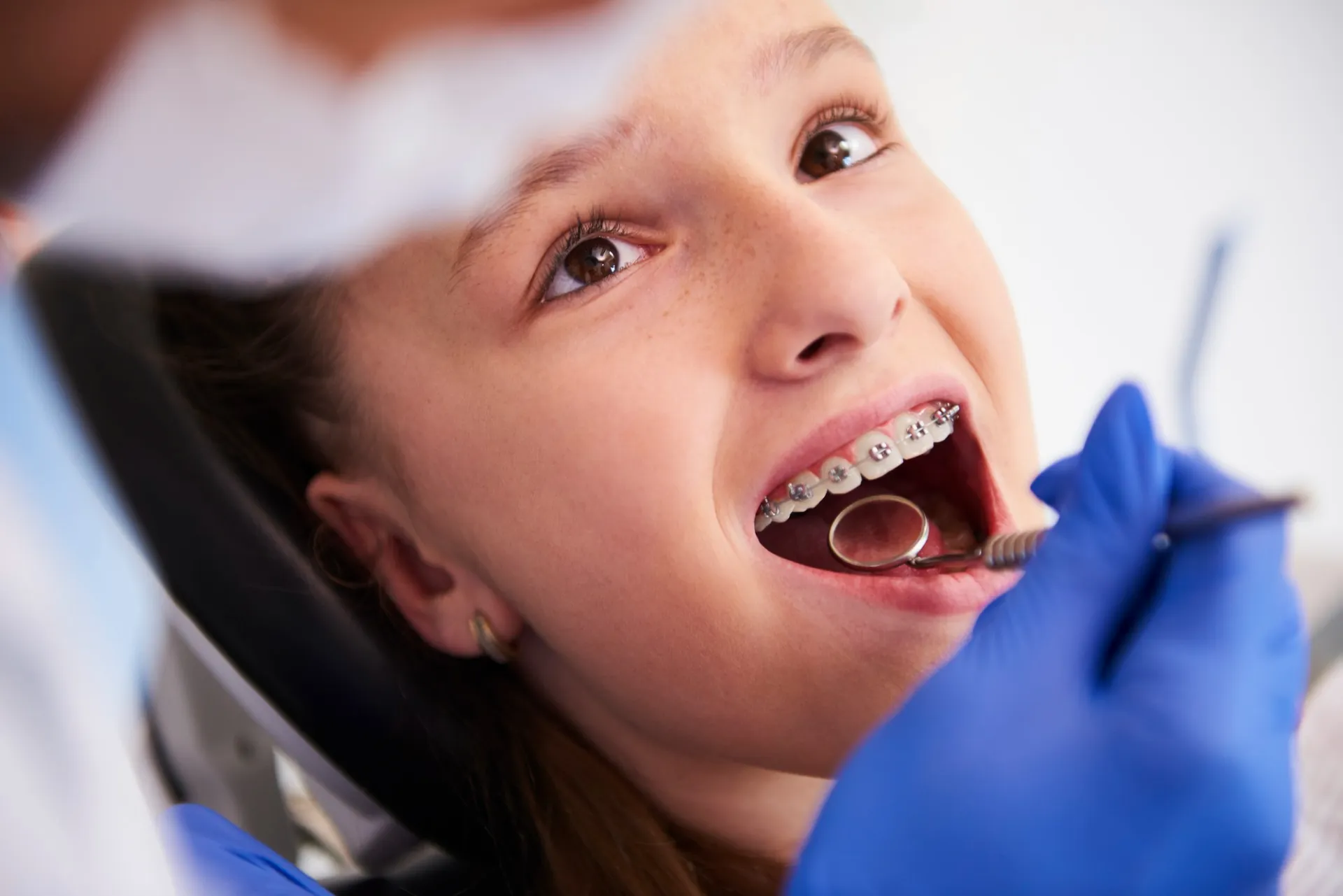
Why Childhood Is a Unique Window
A child’s jaw is still soft and growing, and that changes everything. In an adult, teeth can only be moved through bone that is already fully formed. In a child, an orthodontist can influence how the jaw itself develops, widening a narrow arch, creating room for permanent teeth that have not yet arrived, and steering the bite while the bones are still cooperative. That is why some problems are dramatically easier to solve at eight than at eighteen. Catch a narrow upper jaw early and a simple appliance can widen it. Miss that window and the same correction may later need extractions or surgery.
This is also why the guidance is about timing, not urgency. The American Association of Orthodontists recommends a first orthodontic check by around age 7, not because most 7 year olds need braces, but because that is when an orthodontist can first see the developing picture clearly enough to know whether, and when, to act. Our early evaluation page covers exactly what that age 7 visit looks for.
What We Actually Watch For
- A narrow upper jaw or a crossbite, where the top and bottom teeth meet incorrectly on the sides. A palatal expander can widen a narrow jaw while it is still growing, creating space and often preventing bigger problems later.
- Severe crowding, where there is clearly not enough room for the permanent teeth to come in straight. Guiding this early can reduce, and sometimes remove, the need for extractions.
- A protruding or receding bite, where the upper and lower jaws are growing out of proportion to each other and growth can be used to help balance them.
- Habits that shape the bite, like prolonged thumb or finger sucking and extended pacifier use, which can push developing teeth and jaws out of position.
- Teeth erupting out of sequence, or baby teeth lost too early or too late, which affects how the permanent teeth find their place.
How Treatment Works in Two Phases
When early treatment does help, it usually comes in two phases with a rest in between, and understanding this removes a lot of confusion.
| Phase | When | What it does |
|---|---|---|
| Phase one (early or interceptive) | Around ages 7 to 10, while baby teeth remain | Uses targeted appliances, like an expander or partial braces, to guide jaw growth and create space. Usually 9 to 18 months, not full braces on every tooth. |
| Resting period | Until the remaining permanent teeth come in | We simply monitor as the rest of the adult teeth erupt. No active treatment, just periodic checks. |
| Phase two (if needed) | Early teens | A shorter course of full braces or aligners to finish the alignment, made easier because the foundation was set in phase one. |
Not every child needs two phases. Many need none until all the permanent teeth are in, at which point a single straightforward course of braces or aligners in the teen years is exactly right. Phase one earns its place only when acting early prevents a harder problem later.
When the Right Answer Is to Wait
Most children we see at age 7 do not need treatment yet, and we will tell you so plainly. If your child only needs watching, we monitor their growth at no charge and let you know when, or whether, the time is right. Starting braces too early, before there is a reason, adds months and cost without adding benefit. A practice that recommends treatment for every young child who walks in is telling you something. Honest timing is part of good orthodontic care, and it is the part that protects your family from paying for treatment your child did not need.
What Causes Bite Problems in the First Place
Most bite and alignment issues are inherited, the jaw and tooth sizes a child is simply born with. But some are shaped or worsened by early habits: prolonged thumb or finger sucking, extended pacifier or bottle use, and mouth breathing, which is sometimes linked to airway issues worth evaluating. This is one reason an early look is useful, since some of these are easiest to redirect while a child is still young. If breathing or sleep concerns are part of the picture, our airway orthodontics page explains how those connect.
The Health Reasons, Not Just the Smile
Straightening a child’s teeth is not only about how the smile looks. Teeth that are properly aligned are far easier to brush and floss, which lowers the risk of cavities and gum problems through the years when children are least reliable about cleaning. A balanced bite spreads the force of chewing evenly, protecting teeth from uneven wear. And correcting a jaw discrepancy early can head off the kind of strain that becomes harder to treat in adulthood. The cosmetic result is real, but it sits on top of genuine functional benefits.
The First Visit, and What It Costs
The first step is a relaxed, free evaluation. We examine your child’s teeth and bite, take gentle digital images and a 3D scan, and Dr. Sharma explains what she sees in plain language, including whether any action is needed now. Nothing about the visit is uncomfortable, and there are no needles. You leave knowing exactly where your child stands. Our first visit page walks through the whole appointment.
When treatment is recommended, cost should not stand in the way. We accept most major insurance, verify your benefit before you commit, and offer payment plans at 0 percent interest along with family discounts. See how the numbers work on our cost and financing guide and the plans we accept on our insurance page.
Book a Free Evaluation for Your Child
A relaxed, no pressure look, with an honest answer about whether treatment is needed now or later. No referral required.
Common Questions From Parents
Is my child too young for braces?
Possibly, and that is completely fine. The age 7 visit is a check, not a start date. Most children who come in at that age are simply monitored until the time is right, if it ever comes.
What does early treatment actually prevent?
Guiding jaw growth early can widen a narrow jaw, create room for crowded permanent teeth, correct a crossbite, and reduce the chance of needing extractions or more complex treatment later.
Does my child need a referral from the dentist?
No. You can book an orthodontic evaluation directly, and the first visit is free. Dentists and orthodontists look for different things, so an orthodontic check is worthwhile even if your dentist has not raised it.
Will my child definitely need braces later?
Not always. Early care sometimes reduces or even removes the need for a full course of braces. And many children need only a single straightforward course in the teen years, with no early phase at all.
Do baby teeth matter if they are going to fall out anyway?
Yes. Baby teeth hold space for the permanent teeth and guide them into position. Losing them too early, often to decay, can let other teeth drift into the space and cause crowding, which is one reason early dental care matters.Not always. Early care sometimes reduces or even removes the need for a full course of braces. And many children need only a single straightforward course in the teen years, with no early phase at all.
Keep Reading
For the deeper look at the age 7 visit, see our early orthodontic evaluation page. Learn how a palatal expander widens a narrow jaw, and what comes next in the teen years. Curious about the options themselves? Compare braces and Invisalign. When you are ready, here is what to expect at the first visit.
Sources: American Association of Orthodontists, recommendation for a first orthodontic evaluation by age 7 and guidance on early (interceptive) treatment (aaoinfo.org). Descriptions of phase one treatment and growth guidance reflect standard orthodontic practice. Guidance here is general and not a substitute for an in person evaluation.