
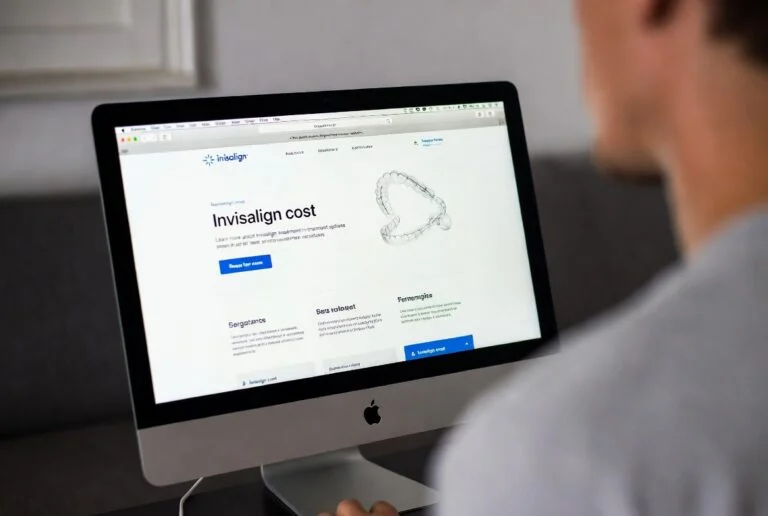
How Much Does Invisalign Cost in California?
Invisalign costs $2,500 to $7,500 in California without insurance. Most patients land between $4,000 and $5,500 for moderate treatment. In the Bay Area, expect the upper half of that range. What decides your number is not the office you walk into, it is how many aligners your case needs.
That last sentence is the part almost nobody explains, and it is the reason two quotes can differ by thousands. This guide breaks down what you actually pay for, tier by tier, what should be included, what tends to get billed separately, how insurance and pre tax dollars cut the number down, and how to tell whether a low quote is a genuine bargain or a smaller treatment wearing the same brand name.
Written and reviewed by Dr. Manu Sharma, DMD, a board certified orthodontist practicing in Newark, California.
Invisalign Cost by Treatment Tier
Invisalign is not one product. Align Technology sells it to providers in tiers, and each tier caps how many aligners you get. Your case is assigned to a tier based on how far your teeth have to move. That assignment, more than anything else, sets your price.
| Tier | Aligners included | Suits | Typical California cost |
|---|---|---|---|
| Invisalign Express | Up to 7 | Very minor movement, a single tooth, small relapse touch up | 1,800 to 2,800 |
| Invisalign Lite | Up to 14 | Mild crowding or spacing, relapse after old braces | 2,800 to 4,000 |
| Invisalign Moderate | Up to 26 | Moderate crowding, gaps, or a mild bite issue | 3,800 to 5,200 |
| Invisalign Comprehensive | Unlimited | Complex cases, significant crowding, real bite correction | 5,000 to 7,500 |
Once you see this table, the mystery mostly evaporates. A quote of $3,000 and a quote of $6,000 are usually not the same treatment being priced differently. They are often different tiers. The important question is never “why is yours more,” it is “which tier is my case, and why?” Any provider should be able to answer that in one sentence.
Invisalign Prices Across California
Regional differences are real but smaller than most people assume, and they track the cost of running a practice rather than the quality of the work.
| Region | Typical range |
|---|---|
| San Francisco and the Bay Area | 4,500 to 7,500 |
| Los Angeles | 4,000 to 7,000 |
| San Diego | 3,500 to 6,000 |
| Orange County | 3,000 to 5,500 |
| Sacramento | 3,000 to 5,500 |
| Inland Empire | 2,800 to 5,000 |
Bay Area pricing sits at the top because rent, wages, and lab costs are higher here. It is not worth driving to another county over it. Case complexity moves your number far more than your zip code does, and a long commute for a treatment that needs visits every 6 to 10 weeks stops being a saving quickly.
What You Are Actually Paying For
An Invisalign fee is not a product price. It is a service delivered over a year or more, and it breaks down roughly like this:
- Lab fees that scale with aligner count. The practice pays Align for the aligners, and a 26 stage case costs the office materially more to produce than a 7 stage one. This is the tier system showing up in your quote.
- Diagnosis and planning. The scan, the X rays, and the digital plan that maps every tooth’s path. On a complex case this is hours of work before a single aligner is made.
- Chair time across the whole treatment. Checkups every 6 to 10 weeks, for a year or more. This is the largest slice, and it is the orthodontist’s time, not plastic.
- Refinements. Teeth do not always track exactly as the software predicted. Roughly 10 to 20 percent of cases need a second short round of aligners to finish properly.
- Retention. Holding the result afterward with retainers.
What Gets Included, and What Quietly Does Not
This is where two quotes stop being comparable. Some items are almost always built in. Others are frequently billed separately, and they are the reason a cheap quote can grow.
| Item | What it is | Usually included? |
|---|---|---|
| Attachments (buttons) | Small tooth colored bumps bonded to teeth so aligners can grip and actually rotate or move them, rather than just tipping them | Usually yes |
| IPR (interproximal reduction) | Very slight reshaping between teeth to create room without extractions | Usually yes |
| Refinements | An extra round of aligners to perfect the finish | Varies. Ask. |
| Retainers | Required afterward to stop teeth drifting back | Varies. Often 100 to 500 extra. |
| Pre treatment work | Cavities, gum treatment, or extractions needed before aligners can safely start | No, billed separately, usually by your dentist |
Four questions that make any quote comparable. Ask every provider, including us: Are refinements included if my teeth do not track as planned? How many retainers come with treatment, and what does a replacement cost? Are all follow up visits included for the full treatment? What happens to the price if treatment runs long? At BirchTree, our quoted fee covers all aligners, all clinically necessary refinements, your retainers, and every follow up visit through active treatment, with nothing added later. We would rather give you one honest number up front than a low one that grows.
The Provider Tier Question, Answered Honestly
You will see offices advertise that they are a Gold, Platinum, or Diamond Invisalign provider, and it is often presented as a measure of skill. It is worth understanding what it actually measures, because it is not what most people assume.
Those tiers count case volume, not training. Align ranks providers by how many cases they submit per year. That is all. A general dental office that treats a high number of simple front tooth cases can reach a top tier. An orthodontist who treats fewer but far more complex cases might sit lower. The badge tells you a practice is busy with aligners. It tells you nothing about whether they trained to correct a bite.
Volume is not meaningless. Experience matters, and a provider who has treated many cases like yours has seen the problems coming. But it is a different thing from specialist training, and it should not be read as a substitute for it. An orthodontist completes two to three additional years of full time residency after dental school, focused only on moving teeth and correcting jaws. That is what the tier badge does not capture. Our plain language guide to choosing an orthodontist covers the questions worth asking either way.
When a Price Looks Too Good
Among providers with similar training, Invisalign fees are fairly consistent. So a dramatically lower quote is worth understanding rather than simply celebrating. Usually it means one of three things, and only one of them is bad:
- It is a lower tier. A $2,800 quote may be Lite, which is genuinely the right, economical answer if your case is mild front tooth crowding. Nothing wrong with this at all.
- It excludes things. Refinements and retainers billed later can add 20 to 40 percent to the real total. The headline was never the price.
- It reflects less experience with aligners specifically. As Forbes Health puts it, if a provider offers Invisalign at a much cheaper rate, it is worth confirming how much experience they actually have with it, because inexperience can mean a slower and less predictable result.
The risk that actually costs money is a case quietly treated as cosmetic when the real problem is the bite. You finish, you are told you are done, and years later the underlying issue surfaces. Correcting it then means paying twice. If your concern is only how the front teeth look, a limited plan may be perfect. If your top and bottom teeth do not meet correctly, that is a structural problem, and braces or comprehensive aligner treatment planned by a specialist is the honest answer.
Does Insurance Cover Invisalign?
Often, yes, and most plans treat it exactly like braces. Four rules decide your number:
- A lifetime maximum, not an annual one. Plans with orthodontic coverage typically offer a separate lifetime benefit, commonly 1,500 to 3,000 dollars. Once used, it does not reset each year.
- Coinsurance, often around 50 percent of the fee up to that lifetime cap.
- Waiting periods. Some plans require 6 to 12 months of coverage before orthodontic benefits activate.
- Age limits. A number of plans still restrict orthodontic benefits to dependents under 21 to 23, though adult coverage is increasingly common. Worth checking rather than assuming.
In practice, a plan with a 2,000 dollar lifetime benefit at 50 percent coinsurance can take a 6,000 dollar treatment to 4,000 out of pocket before financing is even discussed.
The In Network Question That Saves the Most
Here is the lever most people never ask about. When a provider is in network with your PPO, they have agreed to a negotiated rate, a contracted fee that is often below their standard price. You benefit twice: your insurance pays its share, and the number it pays that share against is already discounted. An out of network provider may be excellent, but you are billed the full fee and often left filing for reimbursement yourself.
Call before you assume anything about coverage. Networks change, and two people with the same carrier can have different plans. Call or text 510 796 1793 and we will confirm whether Dr. Sharma is in network with your specific plan, verify your exact orthodontic benefit, and give you your real out of pocket number in writing before you commit to anything. One phone call, no charge, no obligation. Our insurance page lists the carriers we work with, but only that call confirms your plan.
Paying Without Insurance
FSA and HSA, the most overlooked discount
Orthodontic treatment is a qualified medical expense under IRS rules, so you can pay with pre tax dollars. That is effectively a discount equal to your marginal tax rate, commonly 20 to 35 percent. On a 6,000 dollar treatment that is well over a thousand dollars, for doing nothing but paying from the right account.
An FSA is funded through your employer and is generally use it or lose it within the plan year, so orthodontics is a smart way to spend a balance you would otherwise forfeit. Many families deliberately start treatment near a plan year boundary for this reason. An HSA pairs with a high deductible health plan, rolls over year to year, and stays yours, so you can save toward treatment across two years and still pay untaxed.
0 percent payment plans
We break the patient portion into monthly payments at zero percent interest, often with little or nothing down, so a 5,000 dollar balance becomes a manageable monthly figure rather than a lump sum. Most patients land somewhere in the range of 150 to 300 dollars a month depending on the plan length and any insurance applied. We also offer a discount for paying in full up front. Details are on our payment and financing page.
Other honest routes
Third party healthcare financing such as CareCredit offers promotional interest free periods, useful if you need a longer term than an in house plan. And university dental and orthodontic programs sometimes treat cases at reduced rates, with residents working under faculty supervision. Appointments run longer and scheduling is less flexible, but the savings are real and it is a legitimate option worth knowing about.
Are You Even a Candidate?
Cost is academic if aligners are not right for your case. Invisalign generally works well for:
- Crowded teeth and gaps
- Mild to moderate overbite, underbite, or crossbite
- Teeth that shifted after previous braces
- Minor alignment issues on one arch
It is often not the best choice when there is severe crowding or a bite problem needing significant jaw repositioning, advanced gum disease or notable bone loss, implants sitting where teeth need to move, or teeth requiring large rotations. In those situations braces or clear ceramic braces are usually more predictable and sometimes cheaper. We will tell you plainly which camp you are in.
Realistic Ways to Pay Less
- Get two or three consultations. Free ones are common. Comparing them tells you the market rate for your case, and comparing the tier each provider assigns you is even more revealing than comparing the price.
- Ask whether Lite or Express fits. If your case is genuinely mild, a lower tier is thousands less and entirely appropriate.
- Use pre tax dollars. The single biggest lever available to almost everyone.
- Time it to your FSA year if you have a balance that expires.
- Confirm in network status first. It changes the base number, not just the reimbursement.
- Wear them 20 to 22 hours a day. Poor wear is the most common reason treatment stretches out and needs extra aligners, and time is money here in the most literal sense.
Get a Real Number, Free
Ranges only take you so far. In one visit we scan your teeth, tell you which tier your case actually is and why, verify your insurance and in network status, and hand you a written estimate. No pressure to start.
Frequently Asked Questions
How much does Invisalign cost without insurance in California?
Between $2,500 and $7,500, depending on tier. Express and Lite for minor cases run roughly 1,800 to 4,000. Moderate cases run about $3,800 to $5,200. Comprehensive treatment for complex cases runs $5,000 to $7,500. Bay Area pricing sits toward the top of each band.
Why did my friend pay so much less?
Almost always because they were a different tier. A 14 aligner Lite case and an unlimited Comprehensive case are not the same treatment, even though both are called Invisalign. A friend’s price tells you almost nothing about yours.
Is Invisalign cheaper than braces?
They are usually close, and for mild to moderate cases Invisalign can be slightly less. For very complex bites, braces are often both more predictable and more economical. Case complexity drives the cost far more than the appliance you choose.
How much is Invisalign for just the bottom teeth?
Single arch treatment usually falls into a lower tier, roughly 2,500 to 3,500 dollars. But it is not always advisable. Your bite is a system, and moving the lower teeth without accounting for the upper ones can create a new problem while solving the visible one. Worth a specialist opinion before choosing it purely on price.
What is the cheapest way to get Invisalign?
Use your orthodontic insurance benefit, pay with pre tax FSA or HSA dollars, confirm your provider is in network, ask whether a lower tier genuinely fits your case, and use a 0 percent payment plan rather than third party interest. A university program is a further option if you can accommodate the scheduling.
Does a Diamond or Platinum provider mean better results?
Not necessarily. Those tiers count how many cases a provider submits each year, not their training. A high volume general dental practice can rank highly on simple cases. It is a measure of busyness, not of specialist qualification.
How much will my insurance really cover?
Typically around half of the fee up to a lifetime orthodontic maximum, commonly $1,500 to $3,000. Check for waiting periods and age limits. We verify your exact plan before you commit.
Can I start with little or nothing down?
In most cases, yes. Our 0 % plans are built so the down payment is small or none and the balance spreads across treatment.
Will the estimate go up later?
Not with us. Our quoted fee covers the full active treatment including refinements and retainers, so normal treatment adds no charges. You get the complete number in writing before anything begins.
Are attachments and IPR extra?
Not with us, they are part of the treatment. Attachments are the small tooth colored bumps that let aligners actually grip and move a tooth properly, and IPR is minor reshaping to create space. Both are clinical tools, not upsells. Pre treatment work such as fillings is separate and usually handled by your dentist.
How long does Invisalign take?
Roughly 6 to 18 months for most cases. Minor cases can finish in 3 to 6 months, moderate cases 9 to 15, and comprehensive cases 12 to 18 or longer. Consistent wear is what keeps it on schedule.
Keep Reading:
Now that the money side makes sense, see how Invisalign treatment actually works, and weigh it against traditional braces and clear ceramic braces. When you are ready, here is what happens at your first visit.
Treating someone specific? Adults can start at any age, as our adult treatment page explains, teenagers have their own considerations on the Invisalign Teen page, and for children the first step is an early evaluation around age 7, long before cost is a question. Whatever the treatment, retainers are what protect the result.
Sources:
- Align Technology, Invisalign cost and treatment package information (invisalign.com).
- Forbes Health, guidance on evaluating discounted Invisalign pricing.
- Synchrony CareCredit, national clear aligner cost research.
- Internal Revenue Service Publication 502, orthodontia as a qualified medical expense.
- American Association of Orthodontists, training and credentialing standards (aaoinfo.org).
Figures are typical California ranges for 2026 and are not a quote. Tier names and aligner counts follow Align Technology’s provider packages, which the manufacturer may revise. Your written estimate is prepared after an in person examination. This page is educational and is not a substitute for a clinical diagnosis.