
By Dr. Manu Sharma, DMD, board certified orthodontist | October 2026
The day braces come off or the last aligner goes in the case is a great day. It is also the start of the phase that decides whether your new smile lasts: retention.
Patients are often surprised when I tell them retainers are not a short term add on. The research is clear that teeth keep moving throughout life, and the most reliable way to keep a straight smile is to keep wearing some form of retainer, in most cases indefinitely. This article explains why teeth shift, the types of retainers, what the best evidence says about each, and how to make retainer wear an easy habit rather than a chore.
Key Takeaways
- Teeth naturally shift throughout life, whether or not you had orthodontic treatment.
- In a classic long term study, 73 percent of patients had unsatisfactory lower front tooth alignment years after retainers were stopped.
- The AAO states you will likely need retainers for the rest of your life.
- A 2023 Cochrane review found no single retainer type is clearly best; each has trade offs.
- Most patients wear retainers full time at first, then move to nighttime wear as directed.
Why Teeth Move After Orthodontic Treatment
Teeth are not set in concrete. They sit in bone that is constantly remodeling, held by elastic fibers that connect each root to the bone and gum. The American Association of Orthodontists explains that this bone remodeling continues throughout life, and that forces from biting, chewing, and speaking push teeth in certain directions.
Several things drive post treatment movement:
- Gum and ligament fibers need time to settle. The fibers around teeth, especially the ones that resist rotation, can take many months to reorganize after teeth are moved, and they tend to pull teeth back toward their old positions in the meantime.
- Natural aging changes. Throughout adulthood, lower front teeth tend to crowd gradually and the jaws continue to change subtly. This happens in people who never had braces, too.
- Growth. Teenagers and young adults may still have some jaw growth remaining, which can affect the bite.
- Habits and soft tissue pressure. Tongue position, lip pressure, and habits such as thumb sucking or nail biting can influence where teeth settle.
How Common Is Relapse Without Retainers?
Very common. Researchers at the University of Washington followed orthodontic patients for years after retention ended, and their findings shaped how the specialty thinks about retainers. In one study published in The Angle Orthodontist in 1990, 22 of 30 patients, or 73 percent, showed clinically unsatisfactory alignment of the lower front teeth years after retainers were stopped.
This is why the AAO now tells patients they will likely need to wear retainers for the rest of their lives, and notes that skipping retainer wear for even a few days can allow noticeable shifting.
A 2023 systematic review in the American Journal of Orthodontics and Dentofacial Orthopedics looked at adjuncts and alternatives to retainers, such as small gum procedures to release rotation fibers (fiberotomy) and minor enamel reshaping. It concluded that lifelong retention seems to be an inevitable requirement and that current evidence does not support reducing the use of retainers.
The Main Types of Retainers
| Type | What it is | Advantages | Drawbacks |
|---|---|---|---|
| Bonded (fixed) retainer | A thin wire bonded behind the front teeth | Always working; no need to remember it | Harder to floss; wire can break or come loose unnoticed |
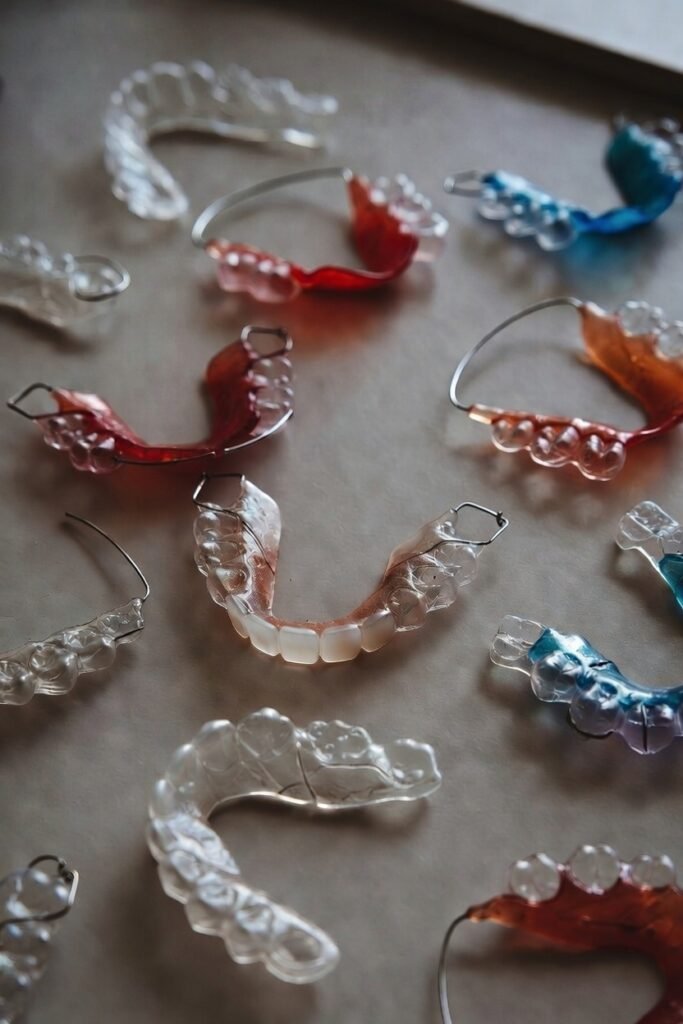
| Clear plastic (vacuum formed) retainer | A clear tray similar to an aligner | Nearly invisible; easy to clean teeth; comfortable | Can crack or wear out; must be worn as directed |
| Hawley retainer | Acrylic plate with a wire across the front teeth | Durable; adjustable; allows the bite to settle | More visible; can affect speech at first |
Many patients receive a combination, such as a bonded retainer on the lower front teeth and a clear removable retainer for the upper or both arches. Our retainers page shows each type.
What the Best Evidence Says About Retainer Choice
The most comprehensive review of retention is a 2023 Cochrane systematic review that pooled 47 randomized controlled trials involving 4,377 patients. Its findings are useful precisely because they are honest:
- Fixed versus removable. In the lower arch, studies found no clinically important difference in stability between bonded wires and clear plastic retainers. Clear plastic retainers were associated with better gum health. Failure rates varied: in one trial, part time clear retainers failed less often than fixed wires, while in another, full time clear retainers failed more often.
- Clear plastic versus Hawley. Stability was similar. Hawley retainers failed less often, but patients found them less comfortable early on.
- Part time versus full time Hawley wear. One trial found no evidence of a difference in stability.
- Overall. The certainty of the evidence was low to very low, and the authors concluded they could not draw firm conclusions favoring any one approach to retention over another.
In plain terms, the best retainer is the one that suits your teeth, your treatment, and your habits, and that you will actually wear and maintain. That is a decision to make with your orthodontist, based on factors such as how crowded or rotated your teeth were, whether gaps were closed, your gum health, and how reliably you will wear a removable appliance.
How Long and How Often to Wear Your Retainer
Every practice has its own protocol, and your orthodontist will tailor it to you, but a typical pattern looks like this:
- The first several months. Retainers are usually worn most of the day and night, removed only to eat, drink anything other than water, and brush. This is the "settling in" period when teeth are most likely to move.
- After that. Wear is often reduced to every night while sleeping.
- Long term. Many patients continue nightly wear indefinitely. Some can eventually reduce to several nights a week, but only if the retainer still fits easily. If it feels tight after a night off, that is a sign your teeth are moving and you need to wear it more often.
Bonded retainers work around the clock, but they still need regular checks. A wire that comes loose from one tooth can let that tooth move without your noticing.
Caring for Your Retainers
The AAO recommends cleaning removable retainers regularly and storing them properly. Practical habits that make retainers last:
- Brush them gently with a soft toothbrush and cool or lukewarm water. Hot water can warp plastic.
- Never wrap them in a napkin. This is how most retainers end up in the trash at restaurants. Always use the case.
- Keep them away from pets. Dogs love the smell of retainers, and chewed retainers are one of the most common replacement requests.
- Avoid drinking anything but water while wearing clear plastic retainers, since liquids can pool against the teeth.
- Clean around bonded wires carefully. A floss threader, superfloss, or water flosser makes this easier. Our guide to brushing and flossing has tips that apply to bonded retainers too.
- Bring your retainers to dental visits so fit and condition can be checked.
Retainer feeling tight or not fitting?
If your retainer no longer fits, call us before your teeth shift further. A quick check now is far easier than retreatment later.
What If You Stopped Wearing Your Retainer?
It happens often, especially with adults who had braces as teenagers. If your teeth have shifted:
- Do not force an old retainer that no longer fits. It can put uncomfortable or uncontrolled pressure on the teeth.
- If it is only slightly tight, your orthodontist may advise wearing it consistently to see whether the teeth settle back. Check with the office first.
- For noticeable relapse, a short course of clear aligners is often an efficient way to correct it, followed by new retainers. Our Invisalign page explains how aligners work for adults, and our page on orthodontic treatment for adults covers broader options.
Retainers After Invisalign
Clear aligners move teeth the same way braces do, through bone remodeling, so retention is just as important. Many aligner patients find the transition easy, because a clear retainer feels much like the trays they are used to. Our comparison of Invisalign and braces covers this and other differences between the two.
Retainers for Children After Early Treatment
Children who complete an early phase of treatment, such as a palatal expander or limited braces, often wear a retainer between phases. Its job is a little different from an adult's retainer. It holds the correction that was achieved, for example a wider upper jaw or a corrected front tooth, while the permanent teeth continue to come in. Some of these retainers are designed with room for erupting teeth, and they may be adjusted or replaced as the mouth grows. If your child loses or outgrows a retainer during this period, let us know promptly so the early correction is not lost.
What Happens at a Retainer Check
After treatment ends, retainer visits become less frequent but remain important. At a typical check, we:
- Look at the fit of removable retainers and check for cracks, warping, or worn areas.
- Inspect bonded wires for loose spots, breaks, or areas where tartar is building up.
- Compare tooth positions with your final records to catch small changes early.
- Review your wear schedule and adjust it if your teeth are stable or if they show signs of movement.
These visits are short, and catching a loose wire or a worn tray early is far simpler than correcting relapse later. Many patients pair retainer checks with their regular dental cleanings so nothing slips through the cracks.
Frequently Asked Questions
Do I have to wear my retainer forever?
For most people, yes, at least part time. Teeth continue to shift throughout life, and the AAO states you will likely need retainers for the rest of your life to keep your result.
Which is better, a permanent retainer or a removable one?
A 2023 Cochrane review found no single type is clearly superior. Bonded retainers work without effort but need careful cleaning and periodic checks, while removable retainers support gum health but depend on consistent wear. Many patients use both.
What happens if I skip my retainer for a few days?
Teeth can begin to shift within days, especially early after treatment. If your retainer feels tight when you put it back in, wear it more consistently, and call your orthodontist if it does not fit.
How long do retainers last?
It varies with the type and how they are cared for. Clear plastic retainers wear down and may need replacing every few years, while bonded wires can last many years if checked regularly.
Can my teeth move even if I wear my retainer?
Small changes are possible, particularly as part of normal aging, but consistent retainer wear greatly limits them. If you notice changes, have your retainer and teeth checked.
Protect the Smile You Worked For
Retention is the final and longest phase of orthodontic care. If you live in Newark, Fremont, Union City, or Milpitas and need a retainer check, a replacement, or help with teeth that have shifted, we are glad to help.
Need a retainer check or replacement?
Our team can assess fit, replace lost or worn retainers, and discuss options if your teeth have moved.
This article is general educational information and is not a substitute for an in person evaluation by a licensed orthodontist.
References
- Martin C, Littlewood SJ, Millett DT, Doubleday B, Bearn D, Worthington HV, Limones A. Retention procedures for stabilising tooth position after treatment with orthodontic braces. Cochrane Database of Systematic Reviews. 2023. Summarized by the Dental Elf.
- Little RM, Riedel RA, Engst ED. Serial extraction of first premolars: postretention evaluation of stability and relapse. The Angle Orthodontist. 1990;60(4):255.
- Al-Moghrabi D, Algharbi M, Arqub SA, Alkadhimi A, Fleming PS. The effectiveness of adjuncts or alternatives to the use of orthodontic retainers in preserving posttreatment outcomes: a systematic review. AJO DO. 2023;163(1):9 to 21. Summarized by the Dental Elf.
- American Association of Orthodontists. Will my teeth keep moving post treatment?
- American Association of Orthodontists. How to clean and care for your retainer.