
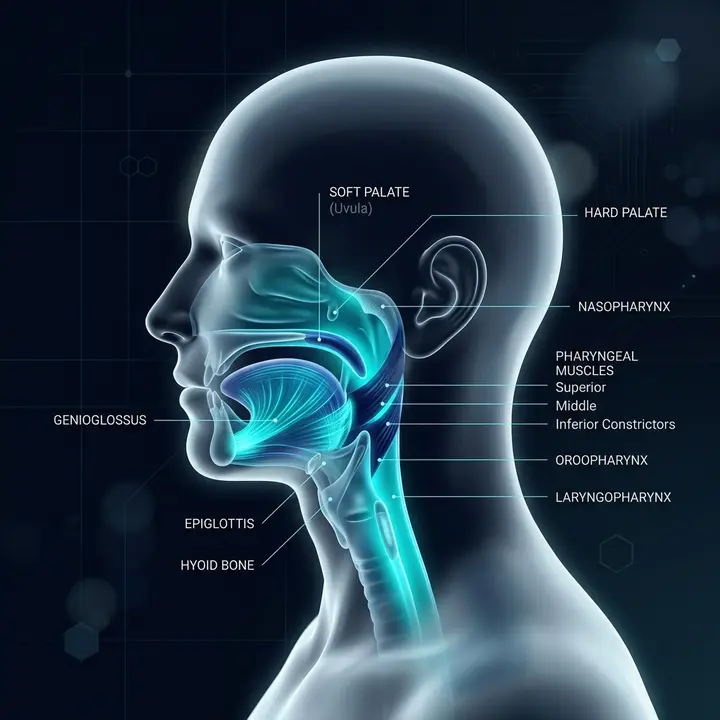
Most parents think of orthodontics as the path to a straighter smile. That is true, of course. But an orthodontic exam can also reveal a lot about jaw growth, bite development, tongue posture, mouth breathing, and the space available for the tongue and airway. Teeth do not develop in isolation. They develop inside a growing face, alongside breathing habits, sleep patterns, oral muscles, and daily function.
That does not mean every child who snores, breathes through the mouth, or has crowded teeth is headed for sleep apnea. Sleep-disordered breathing is complex, and obstructive sleep apnea should always be evaluated by a qualified medical provider. It does mean, though, that early orthodontic care can help families spot certain airway-related risk factors while there is still time to guide growth.
For parents in Fremont, Newark, Union City, Hayward, and nearby Bay Area communities, an early orthodontic evaluation is not just about deciding when to start braces. It is a chance to understand how your child’s jaws, teeth, bite, breathing habits, and oral posture are developing together.
Why Age 7 Is Such an Important Checkpoint
The American Association of Orthodontists recommends that children see an orthodontist by age 7. That timing often surprises parents because many children still have plenty of baby teeth at that age. But that is part of why the visit is useful. Around age 7, enough permanent teeth have erupted for an orthodontist to evaluate bite development, while the jaws are still growing and more responsive to guidance.
At this visit, an orthodontist may find that everything looks healthy, recommend periodic monitoring, or identify a developing issue that is easier to address now than later. BirchTree Orthodontics explains this timing in its guide to early orthodontic evaluation, especially for problems such as crossbites, narrow arches, and growth patterns that may become more complicated in the teen years.
One example is a narrow upper jaw. A narrow palate can contribute to crowding, crossbite, and limited tongue space. In a growing child, a palatal expander may be considered when clinically appropriate. The AAO notes that palatal expansion can widen the upper jaw and may reduce crowding while growth is still active. Once growth is complete, some skeletal corrections become more invasive.
The Connection Between Mouth Breathing, Tongue Posture, and Jaw Growth
Healthy nasal breathing supports a closed-mouth resting posture: lips gently together, tongue resting against the palate, and the jaw relaxed. When a child chronically breathes through the mouth, the lips may stay apart, the tongue may sit low, and the cheeks and face may apply different pressures during growth.
Mouth breathing can happen for many reasons, including allergies, enlarged tonsils or adenoids, nasal obstruction, oral habits, and muscle patterns. An orthodontist does not replace an ENT, pediatrician, dentist, or sleep physician. Still, orthodontists are often in a good position to notice dental and skeletal clues that suggest another evaluation may be helpful.
Parents may want to bring up airway-related concerns if a child regularly:
- Sleeps with the mouth open
- Snores more than occasionally
- Wakes with a dry mouth
- Has restless sleep
- Struggles to keep the lips closed at rest
- Has a narrow palate or crossbite
- Shows early crowding
- Has a low tongue posture or tongue thrust
- Seems tired, irritable, or unfocused despite enough hours in bed
These signs do not diagnose sleep apnea. They are clues. The American Academy of Pediatrics recommends screening children and adolescents for snoring, with diagnostic evaluation when snoring appears alongside symptoms or signs of obstructive sleep apnea. In other words, snoring is worth asking about. It should not be brushed off automatically as “normal kid sleep.”
Can Orthodontics Prevent Future Sleep Apnea?
It would be too strong to say that orthodontics can prevent sleep apnea. No ethical orthodontist should promise that. Pediatric sleep-disordered breathing can involve the nose, tonsils, adenoids, airway muscles, weight, craniofacial anatomy, allergies, and other medical factors. Some children need medical evaluation, sleep testing, ENT care, allergy management, or other interventions.
The more accurate statement is this: early orthodontic care may help identify and address some structural and functional risk factors that overlap with airway concerns.
Depending on the child, orthodontic treatment may help by:
- Guiding upper jaw growth when the palate is narrow
- Correcting crossbites or bite imbalances
- Creating better space for permanent teeth
- Improving the environment for healthy tongue posture
- Reducing crowding that complicates oral function
- Prompting referral when sleep-disordered breathing signs are present
This is why BirchTree’s children and braces guidance matters. Early orthodontic care is not about rushing every child into treatment. It is about timing. When growth guidance is needed, the best window may be earlier than parents expect.
Where Palatal Expansion May Fit
Palatal expansion is one of the orthodontic topics most often discussed in relation to airway. The upper jaw also forms part of the floor of the nasal cavity, so a narrow maxilla can be relevant to both dental crowding and nasal airflow. In the right patient, expansion can create more room across the upper arch and help correct crossbite.
Still, expansion should not be sold as a universal airway cure. It is an orthodontic treatment for specific skeletal and dental findings. Some children with airway symptoms may have large tonsils or adenoids, nasal allergies, a deviated septum, or sleep-related breathing issues that require a physician’s evaluation.
BirchTree’s broader orthodontic FAQ takes this same measured approach, discussing airway issues, expanders, TMJ, and the importance of individualized diagnosis rather than one-size-fits-all answers.
The Role of Myofunctional Therapy
Structure matters, but function matters too. Myofunctional therapy focuses on the muscles and habits of the tongue, lips, cheeks, soft palate, and throat. It often comes up in airway-focused dental and orthodontic conversations because tongue posture, lip seal, swallowing, and breathing patterns can influence oral function over time.
Think of it as exercise and habit retraining for the mouth and upper airway. An orthodontist may create more room or improve the bite, but the tongue still needs to learn where to rest. The lips still need enough tone to stay gently closed at rest. The swallow still needs to happen without the tongue pushing forward against the teeth. If those habits continue unchanged, they can work against the stability of orthodontic treatment and may keep mouth-breathing patterns in place.
Myofunctional therapy may include work on:
- Tongue resting posture
- Lip seal
- Nasal breathing awareness
- Swallowing patterns
- Soft palate and throat exercises
- Oral muscle coordination
- Reducing low-tongue or open-mouth habits
In practice, that might look like tongue-to-palate exercises, controlled swallowing drills, lip closure exercises, cheek resistance work, soft palate activation, or throat exercises used in oropharyngeal therapy. A child with a tongue thrust may need help learning to swallow without pushing the tongue between the teeth. A teen who has finished expansion may need to practice keeping the tongue up against the palate instead of resting low in the mouth. An adult who snores may be working on tongue base and soft palate tone as part of a broader sleep plan.
The common thread is repetition. These are not “do it once and you are fixed” exercises. They are small movements practiced consistently enough for the muscles and nervous system to learn a new default.
The research is still developing, and it should be described carefully. A Cochrane review found that myofunctional therapy may improve some short-term outcomes in obstructive sleep apnea, including daytime sleepiness and sleep quality, though evidence certainty varies. A systematic review and meta-analysis by Camacho and colleagues, available through PubMed Central, reported reductions in apnea-hypopnea index in adults and children, supporting myofunctional therapy as a potentially useful adjunct rather than a replacement for medical care.
Myofunctional therapy is not a substitute for CPAP when CPAP is medically indicated. It is not a replacement for an orthodontist, ENT, pediatrician, sleep physician, or speech-language pathologist. For many patients, though, it can be one useful part of care: improving oral muscle function and helping the tongue, lips, palate, and throat work more consistently.
Why At-Home Consistency Is the Hard Part
Anyone who has done physical therapy knows the truth: the appointment matters, but the homework matters too. Myofunctional therapy has the same problem. Exercises demonstrated in an office can be forgotten by the next day, and a paper handout can disappear under school forms. Children, teens, and adults all struggle with consistency unless the routine is clear, guided, and easy to repeat.
That is where a tool like AirwayTrainer can be useful. AirwayTrainer is a guided airway and myofunctional exercise app built around short daily sessions for the tongue, soft palate, throat, and lip-seal muscles. Its myofunctional therapy at home program uses video demonstrations, timers, structured progression, and a repeatable six-week routine so patients are not left guessing what to practice.
For someone already working with a provider, an app can support carryover between visits. For someone just beginning to learn about airway exercises, it can provide structure instead of leaving them to piece together random videos online. AirwayTrainer also has resources on myofunctional exercises for sleep apnea, oropharyngeal exercises for snoring, and mouth exercises for snoring.
AirwayTrainer is a wellness and exercise tool, not a diagnostic device. If a child or adult has loud snoring, witnessed pauses in breathing, gasping, morning headaches, or significant daytime sleepiness, they should speak with a healthcare professional. But when oral exercises are part of the plan, guided daily practice can make follow-through much easier.
What Parents Should Do Next
Parents do not need to diagnose airway problems at home. They only need to notice patterns and ask good questions. If your child is around age 7, an orthodontic screening with a board-certified orthodontist such as Dr. Manu Sharma can help you understand whether jaw growth, bite development, crowding, or oral posture deserve attention now.
If your child snores regularly, sleeps with an open mouth, gasps during sleep, has chronic nasal congestion, or seems unusually tired during the day, bring those concerns to your pediatrician as well. Orthodontic evaluation and medical evaluation answer different questions, and both can be valuable.
The goal is not to create anxiety around every noisy night of sleep. The goal is to avoid missing patterns that may be easier to address early.
Bottom Line
Early orthodontic care is about more than straight teeth. It can help families understand jaw growth, bite development, tongue posture, mouth breathing, and airway-related warning signs while children are still growing.
Orthodontics cannot promise to prevent snoring or sleep apnea. Myofunctional therapy cannot replace medical diagnosis or treatment. But together, an informed orthodontic evaluation, appropriate medical referrals, and consistent oral muscle training may support healthier breathing habits and better long-term oral function.
For many families, the best first step is simple: schedule the age-7 orthodontic evaluation, mention any mouth breathing or snoring you have noticed, and ask whether your child’s growth and oral habits are on the right track.