
Palatal Expanders For Growing Smiles in the Tri City Area
A palatal expander is a small orthodontic appliance that gently widens a child’s upper jaw before the bones fully harden. It sounds dramatic, but the idea is simple. The roof of the mouth is made of two halves joined by a growth seam called the midpalatal suture. In children that seam is still open, so a light, steady outward force can guide the two halves slightly apart and let new bone fill the space. The result is more room for crowded teeth, a corrected crossbite, and often easier nasal breathing.
This page explains what an expander actually does, the main types, the right age to use one, and what treatment is like day to day. If your dentist mentioned a narrow palate, a crossbite, or “not enough room,” this is the appliance they were likely describing.
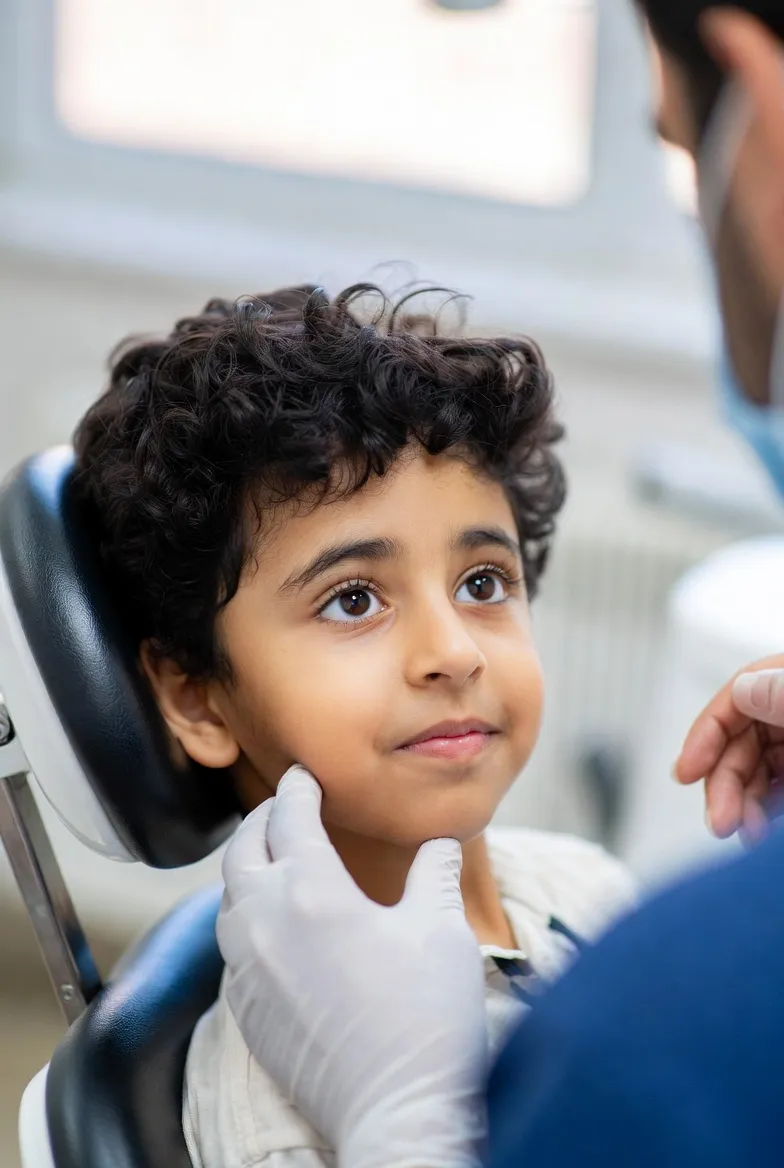
What a Palatal Expander Does, in Plain Terms
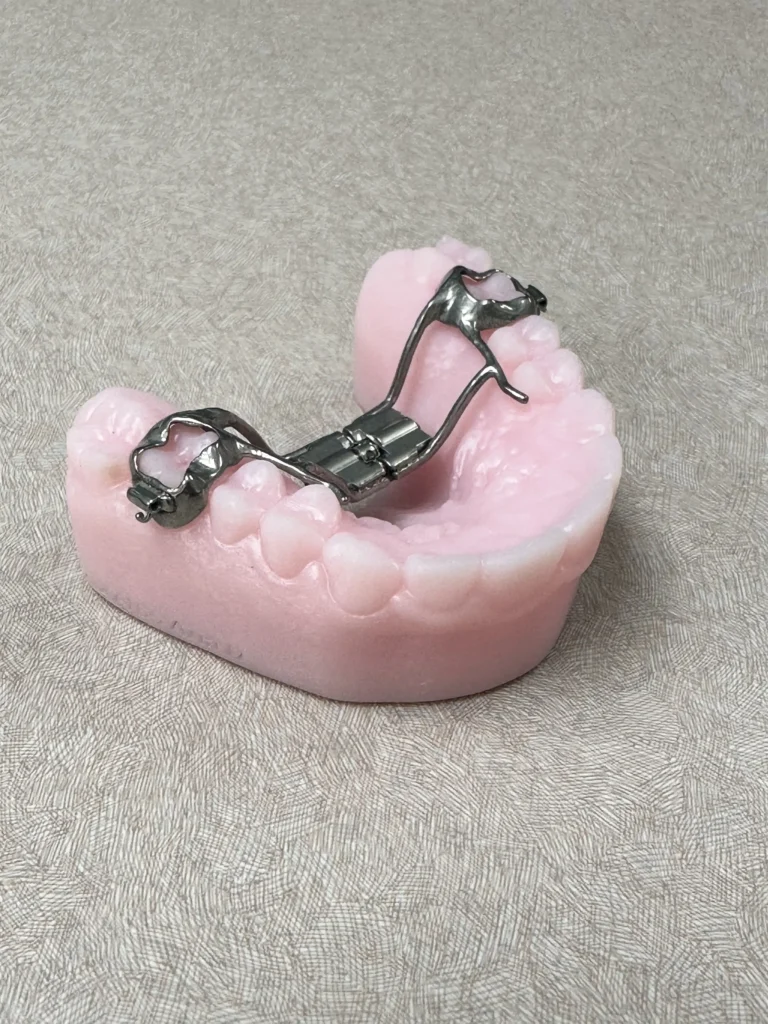
Most expanders attach to the upper back teeth and sit against the roof of the mouth. A tiny screw in the center is turned a small amount each day using a special key, usually for a few weeks. Each turn adds a fraction of a millimeter of width. Because a child’s growth seam has not yet closed, the jaw responds to this force by widening rather than just tipping the teeth outward.
The science behind the timing is well established. Research shows the midpalatal suture generally stays open and responsive until roughly age twelve, then begins to fuse through the teenage years and is usually closed by the mid twenties to mid thirties, with a lot of variation from person to person (rapid maxillary expansion meta-analysis; CBCT study on suture maturation). That is why expanders work so predictably in children and why the same approach in adults usually needs a different technique. For older teens and adults, see our page on nonsurgical expansion with MARPE.
Common reasons Dr. Sharma recommends an expander
- Crossbite, where the upper teeth bite inside the lower teeth on one or both sides.
- Crowding, when there is not enough room for permanent teeth to come in straight.
- A narrow, high palate that can be linked to mouth breathing and disrupted sleep. The breathing connection is covered in depth on our airway orthodontics page.
- Impacted teeth, where widening the arch helps a stuck tooth find its path.
The Main Types of Expanders
There is no single expander. Dr. Sharma selects the design based on the child's age, the problem being corrected, and how much widening is needed.
| Type | How it works | Best suited for |
|---|---|---|
| Hyrax (fixed) | Anchored to the upper molars with a central screw turned daily | The most common choice for moderate widening in children |
| Haas (fixed) | Similar to a Hyrax but also rests against the palate tissue | Cases where spreading the force more broadly is helpful |
| Bonded acrylic (fixed) | Covers the chewing surfaces, useful for added bite control | Younger children or specific bite patterns |
| Quad helix (fixed) | A gentle wire spring that widens slowly without daily turns | Mild widening, no key turning required at home |
| Removable | A retainer-style plate the child can take out | Very mild cases and patients who cooperate well |
What about widening with clear aligners?
Clear aligner systems can encourage modest arch development in growing children through a dedicated package designed for that age group. This is gentler and works within a narrower range than a fixed expander, so it is not a substitute for true skeletal expansion in significant cases. If your child is a candidate, Dr. Sharma will say so. You can read how the kids aligner option fits into the bigger picture on our Invisalign treatment page.
The Right Age Matters
The American Association of Orthodontists recommends a first orthodontic check by age seven. That visit is not about putting young children in braces. It is about catching jaw width problems while an expander is still a simple, predictable fix. Treating a crossbite or a narrow arch early can reduce the need for extractions or surgery later. Our guide to early orthodontic treatment for children walks through what Phase 1 care involves.
Once a child moves through puberty, the growth seam starts to fuse, so a conventional expander becomes less effective. This is one of the few areas in orthodontics where waiting genuinely closes a door. The classification orthodontists use to assess how mature a child’s suture has become was published in the American Journal of Orthodontics and Dentofacial Orthopedics, and it is part of how Dr. Sharma decides whether a standard expander will work or whether a different approach is needed.
What Treatment Is Actually Like
- Fitting: the expander is placed in a short, painless appointment. No drilling, no numbing.
- Daily turns: for fixed expanders, you turn the screw a set amount each day at home. Dr. Sharma shows you exactly how.
- The first few days: mild pressure behind the nose or between the eyes is normal and fades quickly. A small gap may open between the front teeth. That gap is a good sign, it means the jaw is responding, and it closes on its own.
- Speech and eating: a brief lisp and some extra saliva are common for a few days, then the tongue adjusts. Sticky and hard foods are off the menu while the appliance is in.
- Holding the result: once the target width is reached, the expander stays in place for several months so new bone can solidify. Skipping this step is the main cause of relapse.
What It Costs
An expander is often part of a Phase 1 treatment plan rather than a standalone charge, so the fee depends on the full plan and on your insurance. BirchTree accepts Delta Dental and most major PPO plans, files your claim for you, and offers payment options through our financial policy. At BirchTree, expander treatment typically falls in the range of $1000-$2500, confirmed in writing after Dr. Sharma examines your child. There is no charge for the first consultation and no obligation to start.
Why Families Choose BirchTree
BirchTree Orthodontics is led by Dr. Manu Sharma, a board-certified orthodontist serving Newark, Fremont, Union City, and the wider Tri City area. Every expander plan starts with a proper diagnosis, a digital scan, and a clear explanation of why a particular appliance fits your child, in language a parent can follow. You will always know what is being done and why before anything begins.
Frequently Asked Questions
Does a palatal expander hurt?
No. There is pressure for a short time after each turn, but it is not the sharp pain people expect. Most children adapt within a day or two.
Will the gap between the front teeth stay?
No. The gap is temporary and signals that the jaw is widening as planned. It usually closes naturally, and any remaining alignment is handled later with braces or aligners if needed.
How long does my child wear it?
Active turning usually lasts a few weeks. The appliance then stays in for several months to hold the new width while bone forms. Your exact timeline is set at the first visit.
Can an adult get a palatal expander?
A conventional expander is far less effective once the growth seam fuses. Adults who need width are usually candidates for MARPE, a nonsurgical technique designed for mature jaws.
Will my child still need braces afterward?
Often yes. An expander creates room and corrects width, but it does not straighten individual teeth. Many children move into a second phase with braces or clear aligners once enough permanent teeth are present.
Book a Free Expander Evaluation
If a dentist mentioned a narrow palate or crossbite, the best next step is a simple evaluation while your child is still growing. Call (510) 796-1793 or request a consultation. The visit includes an exam, a digital scan, and a plain explanation of whether an expander is the right move. Wondering what to expect? Our first visit guide covers every step.