
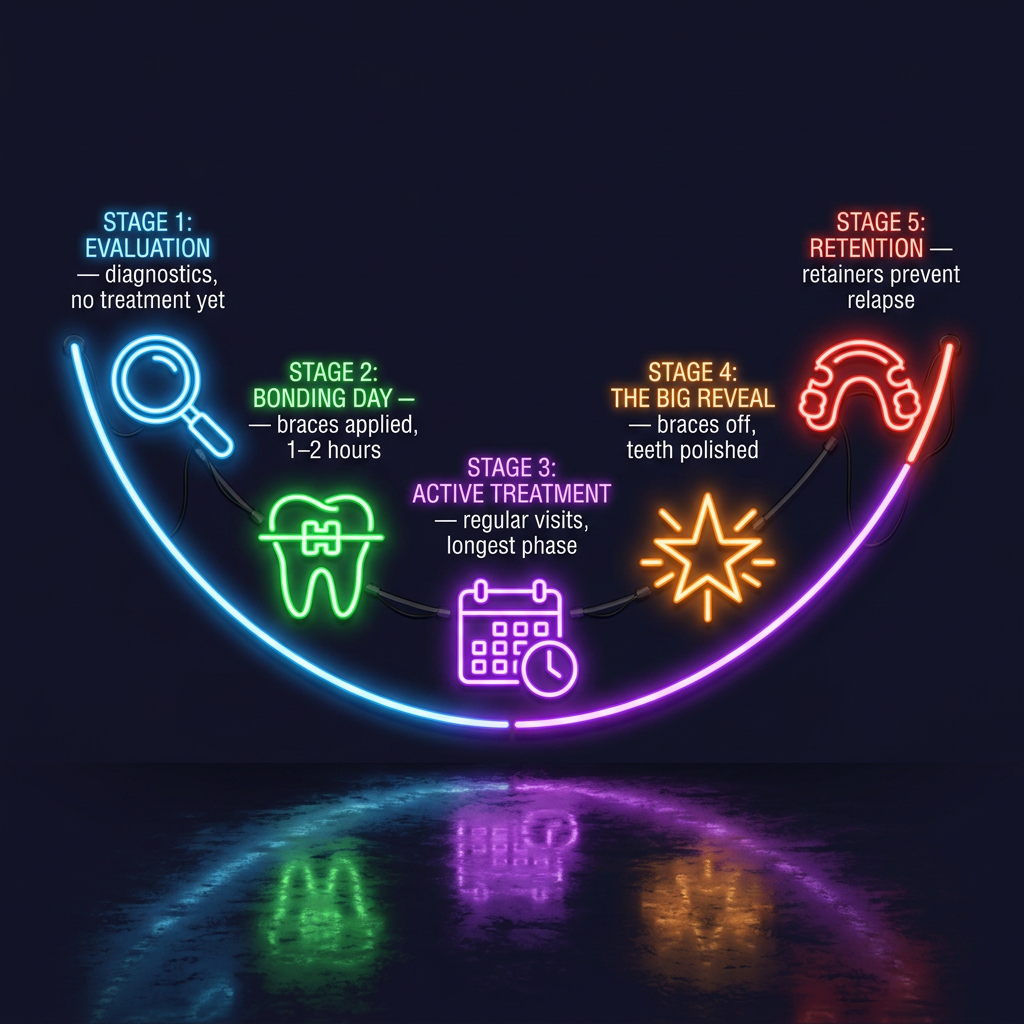
Thinking about straightening your smile but unsure what the journey actually looks like? You’re not alone. At BirchTree Orthodontics, one of the most common questions we hear is, “What happens once I get braces?” The good news is that orthodontic treatment follows a predictable path, and knowing what’s ahead can make the entire experience feel a lot less mysterious.
Whether you’re an adult ready to invest in your smile, a parent exploring options for your child, or a teen gearing up for treatment, here’s a clear breakdown of the five stages of braces, what each one involves, and how to make the most of every step.
Stage 1: The Initial Consultation
Every successful smile transformation begins with a thorough evaluation. Your first visit to BirchTree Orthodontics typically lasts between 30 minutes and an hour, and it’s designed to give your orthodontist a complete picture of your oral health.
During this appointment, you can expect:
- A comprehensive exam of your teeth, jaws, and bite alignment
- Digital impressions (no more goopy molds!) that map your mouth in 3D
- A conversation about your goals, concerns, and lifestyle
- A review of treatment options, including traditional metal braces, ceramic (tooth-colored) braces, and clear aligners
- Before-and-after photos of patients with similar cases so you can visualize your potential results
This is also the perfect time to ask questions about cost, timeline, and financing. By the end of the consultation, you’ll have a personalized treatment plan tailored to your unique smile.
Stage 2: Bonding: The Day Your Braces Go On
Once you’ve decided to move forward, the next step is bonding. This is the appointment where your braces are actually placed on your teeth. While it sounds intense, the process is painless and usually takes about an hour to ninety minutes.
Here’s what happens during bonding:
- Your teeth are cleaned and dried thoroughly.
- A safe adhesive is applied to each tooth.
- Brackets are carefully positioned and bonded to each tooth.
- A thin archwire is threaded through the brackets and secured with tiny elastic bands (often called o-rings or ligatures).
- You’ll get to choose fun colors for your bands or stick with clear or silver for a subtle look.
It’s normal to feel some pressure or mild soreness for a few days afterward as your teeth adjust. Soft foods, saltwater rinses, and orthodontic wax (for any spots that rub) will be your best friends during this transition week.
Stage 3: Regular Adjustments: The Active Treatment Phase
Debonding day is the moment you’ve been waiting for. At this appointment, your braces come off and you finally see your new smile without any hardware in the way.
Here’s what to expect during debonding:
- The brackets are gently removed from each tooth.
- Any leftover bonding adhesive is carefully cleaned off.
- Your teeth are polished to a beautiful shine.
- Final digital impressions are taken so your custom retainers can be made.
Most patients are amazed by how different their teeth feel smooth, free, and beautifully aligned. Take plenty of photos; this is a milestone worth celebrating!
Stage 4: Debonding — Saying Goodbye to Your Braces
This is the longest stage of your braces journey, typically lasting anywhere from 12 to 24 months depending on your case. During this time, your braces are doing their job: gently and consistently guiding your teeth into their ideal positions.
You’ll visit BirchTree Orthodontics every 4 to 8 weeks for adjustments, which may include:
- Tightening or replacing the archwire
- Swapping out worn elastic bands
- Adding rubber bands or auxiliary appliances if needed for bite correction
- Monitoring tooth movement and progress
A few tips for success during this stage:
- Stick to your scheduled appointments, skipping visits can extend your treatment time.
- Avoid sticky, hard, or chewy foods that can damage brackets and wires.
- Brush after every meal and floss daily to keep cavities and gum issues at bay.
- If you’re given rubber bands or extra appliances, wear them exactly as instructed. Compliance is one of the biggest factors in finishing on time.
You may notice your teeth feel slightly loose at times. Don’t worry, that’s a normal sign your teeth are responding to treatment.
Stage 5: Retention: Protecting Your Investment
Here’s a truth that surprises many patients: your teeth have a memory. After years in their original positions, they’ll naturally try to drift back if not held in place. That’s why the retention stage is just as important as everything that came before it.
After debanding, you’ll receive a custom retainer designed specifically for your teeth. Depending on your case, this may be:
- A removable retainer (clear or wire-based) that you take in and out
- A fixed retainer, which is a thin wire bonded behind your front teeth
For the first several months, you’ll typically wear your retainer 24 hours a day, removing it only to eat or drink anything other than water. Over time, your orthodontist may transition you to nighttime-only wear.
Why retention matters:
Skipping retainer wear is the single biggest reason patients end up needing orthodontic treatment a second time. Wearing your retainer as directed protects the time, money, and effort you’ve already invested in your smile.
Frequently Asked Questions About the Stages of Braces
How long does the entire braces process take?
Most patients complete treatment in 12 to 24 months, though some cases finish in as little as 6 months and others may take up to 30 months. Your orthodontist will provide a personalized estimate during your consultation.
Do braces hurt at every stage?
You may experience mild soreness for a few days after bonding and after each adjustment, but most patients describe it as pressure rather than pain. Over-the-counter pain relievers and soft foods help.
How often will I need to visit during treatment? Adjustment appointments are typically every 4 to 8 weeks during the active treatment stage.
Can adults benefit from braces?
Absolutely. About one in five orthodontic patients today is over 21, and modern options like ceramic braces and clear aligners make adult treatment more discreet than ever.
What happens if I don’t wear my retainer?
Your teeth will gradually shift back toward their original positions, which can undo your treatment results and may require additional orthodontic work to correct.
“BirchTree Orthodontics is dedicated to creating beautiful, healthy smiles at every stage of life. Contact us today to learn more about your treatment options.”